Capturing Leaf-Peeper Traffic: Marketing Tips for Maine Businesses During Fall Tourism Season

Paul Landry • September 30, 2026

A local visibility guide for Southern Maine restaurants, shops, and lodging businesses.
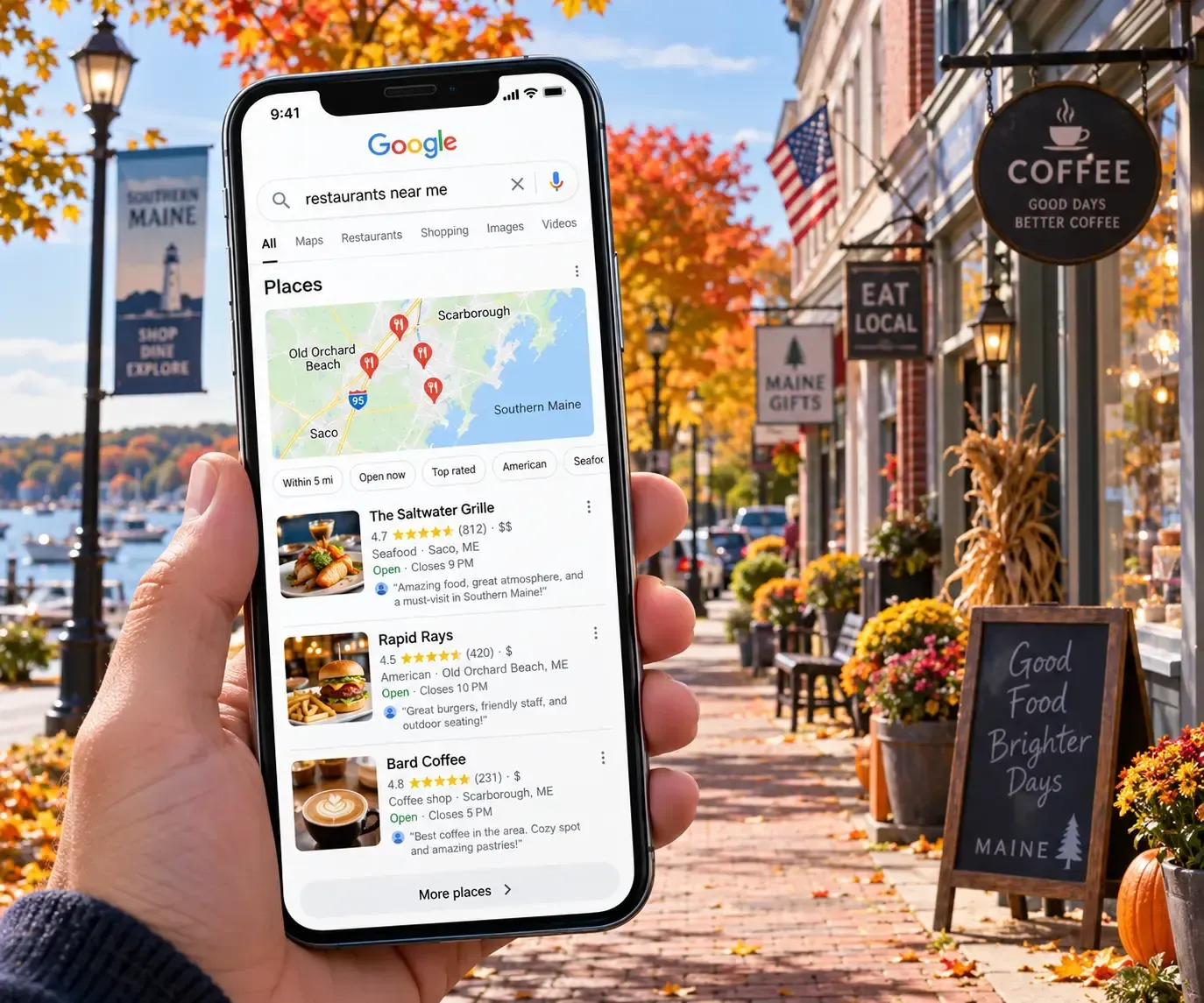
Every October, thousands of visitors pass through Southern Maine chasing fall foliage — and with them comes a wave of potential customers who don't yet know your business exists. Unlike your regular customer base, these are people actively searching their phones in real time for somewhere to eat, shop, or stay nearby. The businesses that show up clearly in that moment capture a share of that traffic. The ones that don't miss it entirely, no matter how good the product or service is once someone walks in.

Here's how to make sure your business is visible to fall tourists searching nearby, right when they're deciding where to go.


Why Foliage-Season Traffic Behaves Differently

Regular customers often already know your business — they search you by name, follow you on social media, or come back out of habit. Fall tourists don't have that history. They're typically searching in the moment, from their phone, using generic terms like "restaurants near me," "coffee shop Saco, ME.

That means your visibility depends heavily on:

  • How well your Google Business Profile is set up and how accurately it reflects your current hours and offerings
  • Whether you show up in local map results for generic, nearby searches
  • How your business looks in photos and reviews to someone who has never heard of you before

This is a different kind of marketing moment than a loyalty-building email campaign — it's about being found and looking credible in the ten seconds someone spends deciding where to go.

Make Sure Your Google Business Profile Is Tourist-Ready

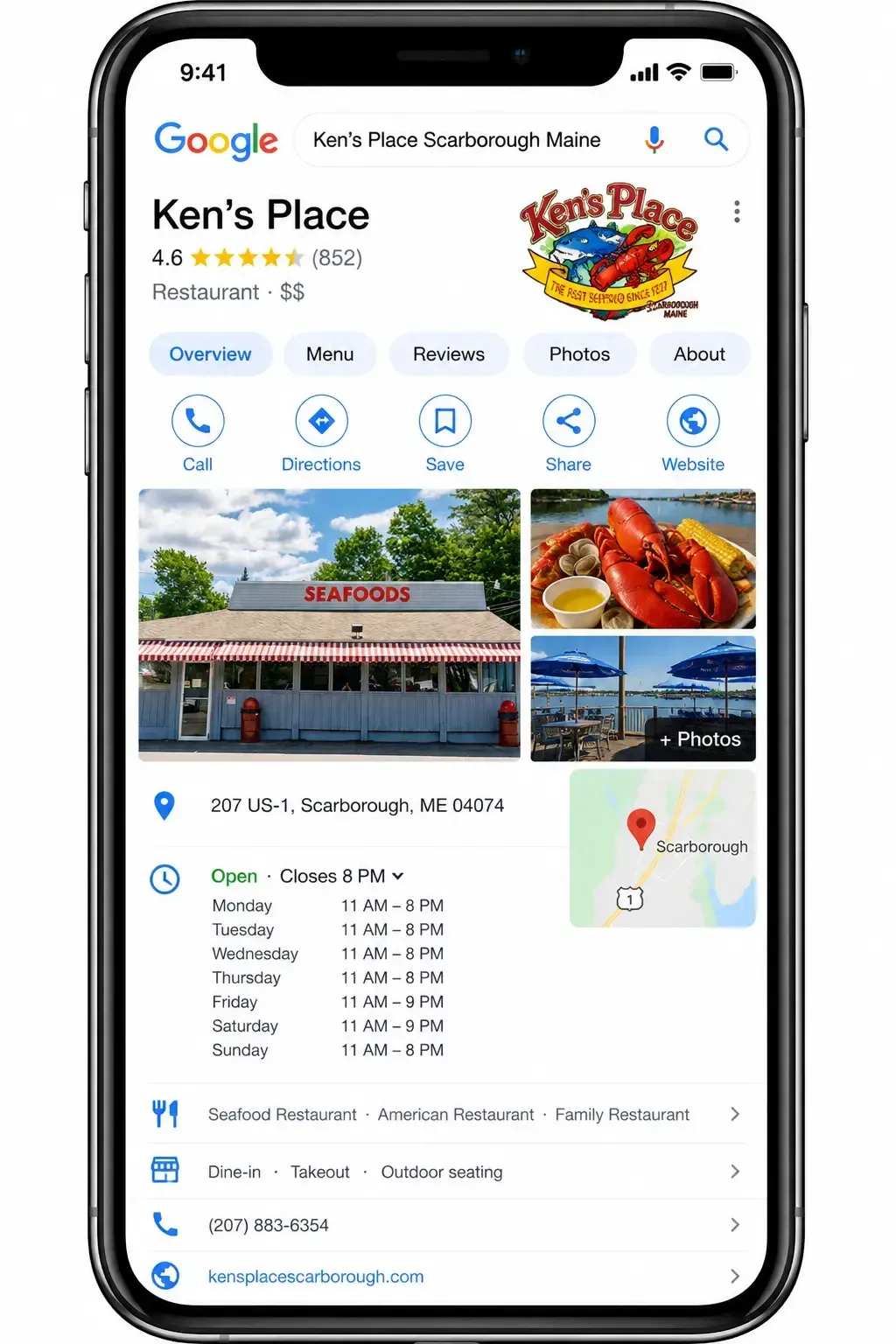
Your Google Business Profile is often the very first thing a visiting tourist sees about your business, so it's worth a dedicated review before the season peaks.

  • Confirm your hours are current, including any seasonal adjustments — nothing turns away a visitor faster than arriving at a locked door because listed hours were wrong.
  • Add recent, high-quality photos — of your storefront, your space, your products, or your food. Tourists lean heavily on photos to decide where to go, more than local regulars typically do.
  • Make sure your category and description are accurate and specific — "coffee shop with outdoor seating" helps more than a generic business category alone.
  • Respond to recent reviews, since an active, well-maintained profile signals a business that's currently operating well, not one that might be closed or inconsistent.


Lean Into Local, Specific Keywords

Tourists rarely search for your business name—they search for their situation: their location, what they want, and sometimes what's nearby. Your website and content can capture some of that intent with location-specific language.

  • Reference nearby landmarks, scenic routes, or towns naturally in your website copy where relevant (a scenic byway, a well-known lookout, a popular trail)
  • If you have a blog or content section, a short seasonal post — best photo spots nearby, a fall menu feature, foliage-viewing tips from a local's perspective — can capture searches from visitors planning their trip in advance
  • Make sure your address and directions are easy to find and accurate, since tourists are navigating from unfamiliar starting points.


Use Social Media for What Tourists Actually Look For

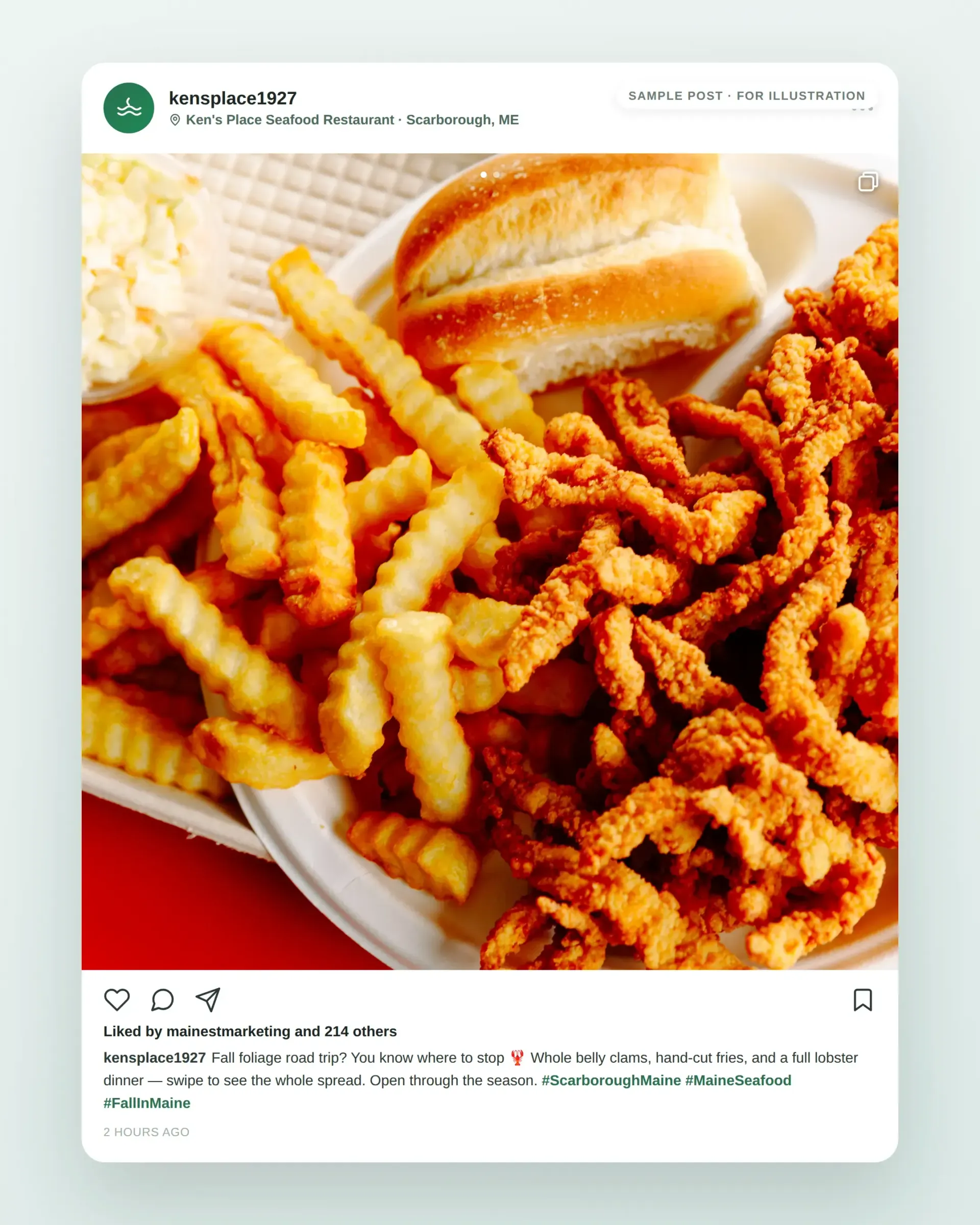
Tourists often check a business's social media before deciding whether to visit, especially for restaurants and shops. A few things matter more during this season than usual:

  • Recent activity — a page that hasn't posted in months reads as possibly closed or inactive to someone unfamiliar with the business
  • Real, current photos — of your actual space, current menu, or current inventory, not years-old stock images
  • Location tags — tagging your location on posts and stories makes your business discoverable to people browsing what's nearby

A short, well-timed post featuring a fall-specific offering — a seasonal dish, a foliage-viewing recommendation from your window or patio, a limited-time item — tends to perform well precisely because it signals "this is happening right now, here."

Consider a Short, Targeted Paid Push

For businesses in higher-traffic tourist areas, a modest local paid search or social ad campaign timed to foliage season can extend reach beyond organic visibility alone — particularly for keywords tied to nearby attractions or scenic routes where a lot of casual searching happens. This doesn't need to be a large or ongoing investment; a focused two-to-three-week push during peak foliage weeks is often enough to capture meaningful additional traffic. [INTERNAL LINK: /services/sem "Maine Street Marketing's paid search services"] can help identify which local terms are worth targeting for this kind of short seasonal window.

Don't Let a Great First Visit Go to Waste

Tourist traffic is a one-time opportunity to turn a visitor into a repeat customer if they're ever back in the area — or into a referral for friends and family. A few small habits help capture that value:

  • Ask happy visiting customers for a review before they leave the area — it's often easier to ask in the moment than to follow up later
  • Offer a simple way to join your email list or follow your social media, for visitors who may return seasonally
  • Make gift cards or shippable products visible for tourists who want to bring a piece of the experience home or send it to someone else

FAQ

When should I start preparing for fall tourism season?

Early-to-mid September is a good target to review your Google Business Profile, photos, and hours so everything is current before foliage traffic picks up in October.

My business isn't directly in a tourist area — is this still relevant?

If you're anywhere along a route tourists commonly travel, or in a town near popular foliage viewing spots, you may see more incidental traffic than expected. It's worth checking your visibility even if tourism isn't your primary customer base.

What's the highest-impact, lowest-cost thing I can do for foliage season?

Updating your Google Business Profile with current hours, accurate categories, and recent photos usually delivers the best return for the least effort and cost.

Should I run paid ads specifically for tourist traffic?

It can be worthwhile for businesses in high-traffic areas, especially as a short, focused campaign during peak foliage weeks rather than an ongoing spend.

How do I turn visiting tourists into repeat or referral customers?

Ask for reviews while satisfaction is high, make it easy to follow your business on social media or join your email list, and offer something portable — like a gift card — that extends the experience beyond a single visit.

Get Found by Fall Visitors

Foliage season traffic is real, but it rewards businesses that are visible and current at exactly the right moment. Maine Street Marketing's local SEO and listings services ensure your business shows up when tourists search nearby. Contact us to get your profile and visibility ready before peak season hits.

Fall and Holiday Email Plan banner with laptop dashboard, planner, and festive decor on a desk
By Paul Landry • September 24, 2026
September is the ideal time for Southern Maine small businesses to plan Q4 email marketing. Learn how to segment, schedule, and time fall and holiday campaigns.
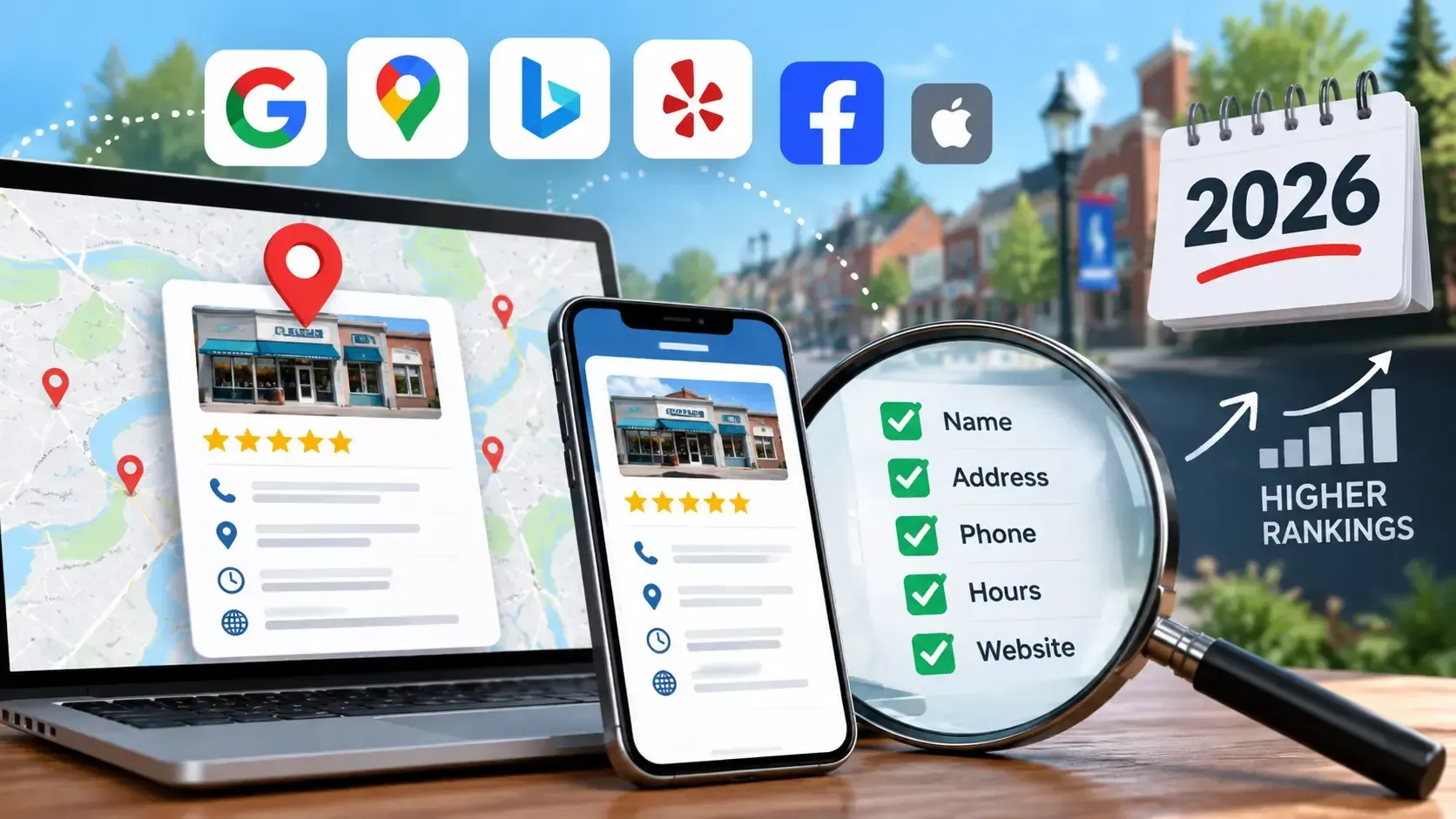
Digital marketing SEO scene with laptop, phone, map pins, rankings shield, and 2026 calendar
By Paul Landry • September 17, 2026
Inconsistent business listings quietly hurt local rankings. Learn what NAP consistency is and how Southern Maine businesses can fix it.
Online reviews dashboard with smiling people, star ratings, laptop, and upward green growth chart
By Paul Landry • September 9, 2026
Learn how Southern Maine small businesses can use Google and Facebook reviews to boost local SEO, build trust, and win more customers.
Black AI magnifying glass icon with circuit lines on white background
By Brenda Cormier • July 29, 2026
We're not just building websites anymore. We're building AI-ready digital headquarters
Hands typing on a laptop beside a white mouse in a dimly lit workspace with a search bar overlay.
By Mikenzie Melendez • June 1, 2026
Discover how website accessibility impacts SEO, user experience, and customer conversions in 2026. Learn why accessible websites rank better and help small businesses grow online.
Hand holding a credit card over a laptop, with a red location pin highlighting an online store icon.
By Paul Landry • May 8, 2026
Near Me searches typically happen on smartphones, voice assistants, or AI-powered search tools.
Black AI magnifying glass icon with circuit lines on white background
By Mikenzie Melendez • May 7, 2026
Ai has changed the way people search online
Man looking at computer screen with web design sketch, drinking coffee.
By Mikenzie Melendez • March 2, 2026
In today’s digital world, a company’s website is often the first interaction customers have with a business. For Maine businesses—where community, reputation, and relationships carry enormous weight—web design plays a crucial role in establishing credibility and trust. A professional, user-friendly website does more than just look good; it communicates your reliability, values, and attention to detail. At Maine Street Marketing, we believe that great web design isn’t just about aesthetics—it’s about building confidence in your brand and creating meaningful connections with your audience. 1. First Impressions Matter Visitors form an opinion about your business within seconds of landing on your website. A sleek, modern, and easy-to-navigate site tells customers you’re professional and trustworthy. On the other hand, an outdated or cluttered website can make your business seem unreliable or behind the times. For Maine businesses competing in local markets, where trust and familiarity matter, first impressions can determine whether a visitor becomes a customer—or moves on to a competitor. 2. Design Consistency Builds Credibility Consistency in web design—colors, fonts, tone, and imagery—helps reinforce your brand identity. When everything aligns, your business appears more organized, cohesive, and dependable. This harmony builds trust because customers recognize your brand across platforms and feel more confident engaging with it. Maine Street Marketing ensures your website reflects your brand values while maintaining a professional and consistent design that strengthens your credibility. 3. User Experience Reflects Professionalism A user-friendly website isn’t just convenient—it’s essential for customer trust. Smooth navigation, clear calls to action, and fast load times show that you value your visitors’ time. If customers struggle to find information or experience technical issues, they may associate that frustration with your business. At Maine Street Marketing, we focus on intuitive web design that keeps users engaged and encourages them to take the next step—whether it’s contacting your business or making a purchase. 4. Mobile Responsiveness Builds Confidence With more customers using smartphones to browse the web, mobile responsiveness is a must. If your website doesn’t function properly on mobile devices, potential customers might assume your business isn’t up-to-date or professional. Maine Street Marketing designs responsive websites that look and perform flawlessly across all screen sizes—ensuring every visitor has a positive, trustworthy experience. 5. Secure, Transparent Design Inspires Trust Incorporating trust signals into your web design—such as HTTPS security, visible contact information, testimonials, and clear privacy policies—shows visitors that your business is legitimate and transparent. Customers are more likely to trust a business that takes online security seriously. Our team helps Maine businesses integrate these essential elements, building confidence and encouraging conversions. 6. Local Touch, Global Standards For Maine businesses, connecting with the local community is vital—but that doesn’t mean sacrificing modern web standards. A professionally designed website that feels local yet polished helps you compete with national brands while maintaining a Maine-centric appeal. Maine Street Marketing combines local understanding with world-class design principles to ensure your online presence feels authentic and trustworthy.  Conclusion A great website is more than a digital storefront—it’s a trust-building tool that can transform how customers perceive your business. From first impressions to ongoing engagement, web design plays a direct role in shaping your reputation. At Maine Street Marketing, we help Maine businesses create websites that not only look beautiful but also instill confidence, reflect professionalism, and inspire loyalty.
Two people working on a laptop displaying
By Mikenzie Melendez • February 4, 2026
In Maine’s competitive business landscape, small business owners are constantly looking for ways to grow their customer base, increase brand awareness, and boost sales. While organic marketing is essential for long-term success, paid advertising offers a faster, more targeted path to growth. With platforms like Google Ads, Facebook, and Instagram, Maine small businesses can reach the right audience at the right time—and see measurable results. At Maine Street Marketing, we specialize in helping Maine businesses leverage paid advertising to accelerate growth and maximize their return on investment.  1. Reaching the Right Audience One of the biggest advantages of paid advertising is the ability to target your ideal customers. Platforms like Google Ads and Facebook allow businesses to focus on specific demographics, interests, and locations. For Maine small businesses, this means you can reach local customers who are actively looking for your products or services—whether you run a café in Portland or a construction company in Bangor. By targeting the right audience, you reduce wasted ad spend and ensure your marketing dollars are working effectively. 2. Fast, Measurable Results Unlike traditional advertising, paid digital campaigns deliver instant visibility and quick feedback. Within days—or even hours—you can see how your ads are performing. Maine Street Marketing helps local businesses track key metrics like clicks, impressions, conversions, and cost per acquisition. This real-time data allows for quick adjustments, ensuring every campaign delivers the best possible results. 3. Building Brand Awareness in Maine’s Market For small businesses, establishing brand recognition is essential. Paid ads ensure your business stays visible to potential customers, even if they don’t convert immediately. Every impression reinforces your brand’s presence in the local community. Over time, this consistent visibility builds familiarity and trust—two key factors for success in Maine’s relationship-driven markets. 4. Driving Website Traffic and Leads Paid advertising drives qualified traffic directly to your website. With well-structured campaigns, you can guide visitors to take specific actions such as requesting a quote, scheduling a consultation, or making a purchase. Maine Street Marketing uses a combination of search ads, social media campaigns, and remarketing strategies to attract visitors who are most likely to convert into paying customers. 5. Competing with Larger Brands One of the biggest challenges for Maine’s small businesses is competing against large national companies with big marketing budgets. Paid advertising levels the playing field. With strategic keyword targeting and localized campaigns, small businesses can appear right alongside major competitors in search results and social feeds. Maine Street Marketing helps design campaigns that emphasize your local advantage—authenticity, community trust, and personalized service. 6. Budget Flexibility and Control Paid advertising doesn’t require a massive budget to be effective. Platforms like Google and Facebook let you set daily or monthly budgets that fit your goals. You can start small, test different strategies, and scale up as you see results. This flexibility makes paid advertising one of the most accessible and cost-efficient ways to grow a Maine business. 7. Complementing Your Organic Marketing Efforts Paid advertising works best when combined with organic marketing strategies like SEO and content marketing. While SEO builds long-term credibility, paid ads provide immediate exposure. Maine Street Marketing helps integrate both approaches, ensuring that your business gets both short-term results and sustained growth over time. For Maine small businesses looking to grow quickly and effectively, paid advertising offers a proven path to success. It helps you reach the right audience, build brand awareness, and generate measurable results—all while staying within your budget. At Maine Street Marketing, we tailor paid advertising strategies that deliver real results for Maine’s unique markets. Whether you’re just starting or ready to scale, our team can help you turn clicks into loyal customers.
Person using a laptop with a digital marketing graphic overlaid.
By Mikenzie Melendez • January 6, 2026
In Maine, where community, authenticity, and trust play a major role in consumer decisions, storytelling has become one of the most powerful tools in digital marketing. People don’t connect with products or services alone—they connect with the stories behind them. For Maine businesses competing in a crowded digital landscape, storytelling offers a way to stand out by building emotional connections that last. 1. Why Storytelling Matters in Maine’s Market Maine consumers value authenticity. Whether you're a family-owned company in Downeast Maine or a growing service provider in Southern Maine, customers want to know the people, passion, and purpose behind your brand. Storytelling helps businesses convey their identity in a relatable way—making potential customers feel like they already know you before they walk through the door or request a quote. 2. Storytelling Builds Trust and Humanizes Your Brand In today’s digital world, trust is everything. Storytelling allows you to show your values, highlight your commitment to the community, and share real experiences that reflect who you are. When customers see your team, hear your mission, or learn the history of your business, they feel more confident choosing you over competitors. 3. How to Incorporate Storytelling into Digital Marketing Storytelling can be woven into every part of your digital marketing strategy. On your website, share your brand story or the inspiration behind your business. On social media, highlight behind-the-scenes moments, employee spotlights, or customer success stories. Through video, show real interactions and authentic Maine experiences. Email newsletters can include personal updates, community involvement, or milestones that help your audience feel connected. 4. Maine Businesses Benefit from Local, Community-Driven Stories Maine’s culture is rooted in community. Sharing stories that reflect local partnerships, events, or customer experiences helps businesses deepen their connection with their audience. In a state where word-of-mouth still plays a big role, storytelling amplifies this effect by spreading your message online and inspiring others to share it. 5. Storytelling Strengthens Your Brand Identity A strong brand identity comes from consistency and clarity. Storytelling gives you a foundation for your messaging—everything from social posts to website copy will feel more cohesive when it stems from the same core story. When customers understand who you are and what you stand for, they are far more likely to stay loyal and recommend your business.  Storytelling is more than a marketing tactic—it’s a bridge between Maine businesses and the communities they serve. It builds trust, strengthens brand identity, and creates emotional connections that turn customers into advocates. With Maine Street Marketing’s expertise, local businesses can craft compelling stories that resonate deeply with their audience and elevate their digital presence.