
They Visited heYour Website and Left. Now What?
How retargeting ads bring holiday shoppers back to Southern Maine businesses
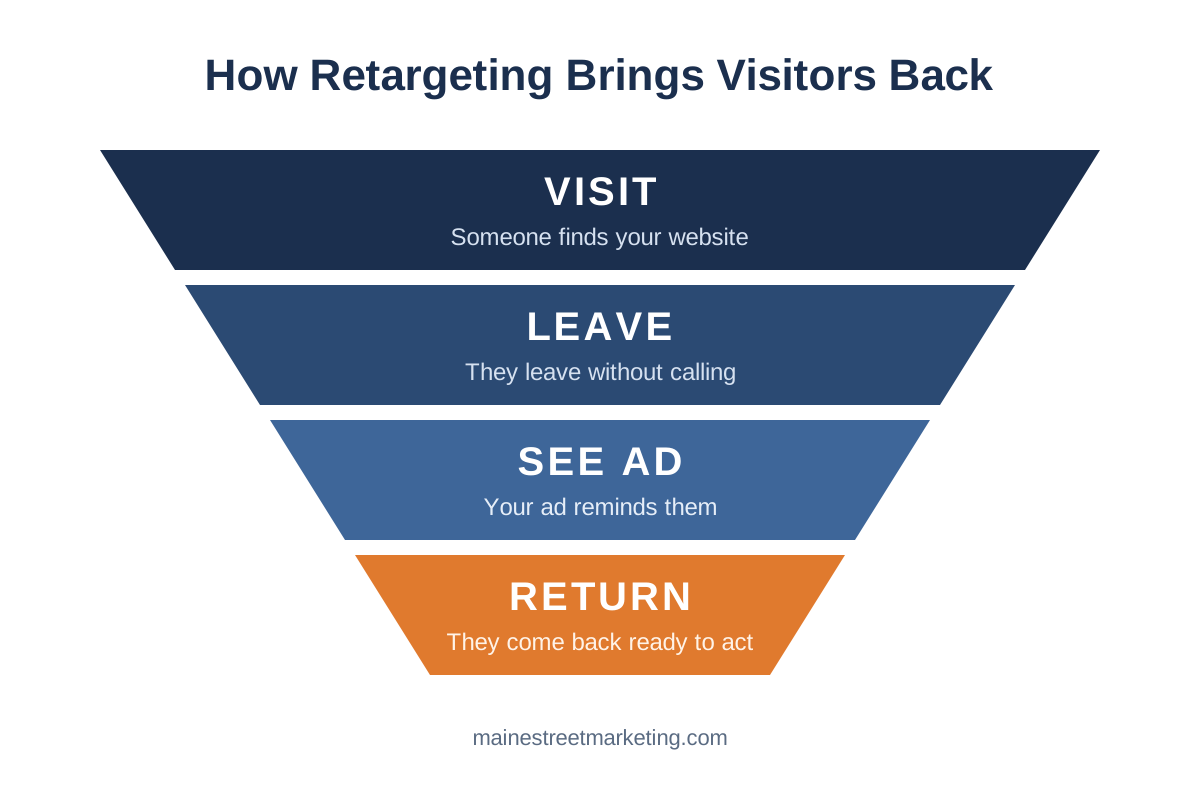
Someone in Scarborough searches for a new furnace installer. They click on your website, look at your services page, check your reviews, and then their phone rings. They close the browser. By dinnertime, they've forgotten your name.
That happens every day, and it happens to every business with a website. Most visitors leave without calling, booking, or buying on their first visit. It's not because they weren't interested. It's because people research in pieces, get interrupted, and compare options before they decide.
Retargeting keeps you in the running after they leave.
What retargeting actually is
Retargeting, also called remarketing, shows your ads to people who have already visited your website. After someone leaves your site, they start seeing your ads as they browse news sites, scroll Facebook or Instagram, watch YouTube, or use apps.
It works through a small piece of code on your website, often called a tag or pixel. When someone visits, the code adds them to an anonymous audience list. You don't learn who they are, and they don't receive anything directly from you. Your ads simply become eligible to appear to that group.
The result is a gentle reminder. The furnace shopper from Scarborough sees your ad two days later while reading the weather forecast, remembers your company, and calls.
Why it matters most during the holidays
November and December are when retargeting earns its keep. Shoppers research more businesses than usual, compare gifts, and juggle a dozen to-do lists. The odds that someone finishes what they started on your website in one visit are lower than at any other time of year.
At the same time, every big retailer is advertising heavily. A local business can't outspend them, and it doesn't need to. Retargeting focuses your budget on the small group of people who already showed interest in you specifically. That's a far better use of a modest ad budget than trying to reach everyone in York and Cumberland Counties.
Who should use retargeting?
Retargeting works for almost any business with a website that gets steady traffic, but it's especially effective for:
- Businesses with longer decision times. Contractors, home services, auto repair, and professional services where people compare quotes before calling.
- Retailers with online stores. Shoppers who browse products or abandon a cart are prime candidates for a reminder.
- Restaurants and event venues. Someone who looked at your holiday party menu but didn't book is worth reminding before the dates fill up.
- Seasonal offers. Gift cards, holiday packages, and limited-time promotions all benefit from being seen more than once.
If your website gets very little traffic, retargeting won't have much of an audience to work with. In that case, improving your SEO, Google Business Profile, or paid search comes first.
How to set up retargeting the right way
Install the tracking code. Google Ads and Meta (Facebook and Instagram) each use their own code. Both can be added to most websites without a redesign.
Update your privacy policy. If you use retargeting, your website's privacy policy should say so and explain that visitors can opt out. This is a standard requirement from the ad platforms.
Build smart audiences. Not every visitor is equal. Someone who viewed your pricing page or contact page is more interested than someone who bounced off your homepage in three seconds. Separate audiences let you show different ads to each group.
Exclude people who already converted. If someone already called or bought, stop showing them the same "call us today" ad. It wastes money and can annoy a brand-new customer.
Set a frequency cap. Retargeting gets a bad reputation when the same ad follows someone everywhere ten times a day. Limiting how often each person sees your ad keeps the reminder helpful, not irritating.
Give people a reason to come back. The best retargeting ads offer something new: a holiday promotion, a gift card bonus, a seasonal service special, or a strong customer review. A plain logo with "remember us?" doesn't give anyone a reason to click.
Retargeting and your other marketing
Retargeting doesn't replace your other marketing. It makes it more effective.
Your SEO, social media, and paid search ads bring people to your website. Retargeting picks up the ones who didn't act on the first visit. Your direct mail and email marketing reach people who already know you. Together, they keep your business in front of the right people at every stage of their decision.
It also works hand in hand with a well-built website. If your site loads slowly or makes it hard to call or book, retargeting will bring people back to the same frustrating experience. A fast, mobile-friendly site with clear contact options is the foundation that makes every ad dollar go further.
What does it cost?
Retargeting is one of the more affordable forms of digital advertising because the audience is small and targeted. You set a daily or monthly budget, and you control how long a campaign runs. Many small businesses run retargeting only during their busiest selling periods, like the holiday season, and pause it when things slow down.
The real cost question is how much business you're losing right now from visitors who leave and never come back. For most businesses, recovering even a few of those customers each month covers the campaign cost.
How Maine Street Marketing can help
We set up and manage display advertising and retargeting campaigns for small businesses across Southern Maine, from installing the tracking code to designing ads and adjusting campaigns based on results. And like all our services, there's no long-term contract.
If you'd like to bring back the holiday shoppers who are already visiting your website, call us at (207) 229-8159 or (207) 807-1485, or email howcanwehelp@mainestreetmarketing.com.
Frequently Asked Questions
What is retargeting?
Retargeting, also called remarketing, shows your ads to people who have already visited your website as they browse other websites, social media, and apps. It keeps your business in front of people who have already shown interest.
Is retargeting the same as display advertising?
Not exactly. Display advertising shows image ads to a broad audience based on interests or location. Retargeting is a type of display or social advertising that only reaches people who previously visited your website.
Can retargeting ads see who visited my website?
No. Retargeting audiences are anonymous. You don't learn visitors' names or contact information; your ads simply become eligible to appear to that group.
How do I keep retargeting ads from annoying people?
Set a frequency cap to limit how often each person sees your ad, exclude people who already became customers, and refresh your ads regularly so they stay relevant.
Does my business need a lot of website traffic for retargeting to work?
It needs steady traffic. Ad platforms require a minimum audience size before ads can run, so very low-traffic sites should focus on SEO, listings, or paid search first.