Is It Time for a Brand Refresh? Signs Your Logo and Branding Are Holding You Back
A planning guide as Southern Maine businesses head into Q4 and next-year budgeting
October is often when small business owners start thinking about next year—budgets, priorities, and what to invest in as you head into a new year. It's also a natural moment to take an honest look at your branding and ask whether it's still doing its job or quietly working against you.
A brand refresh doesn't have to mean starting over. Often, it means recognizing a handful of specific signs and addressing them directly, without the cost or disruption of a full rebrand. Here's how to tell the difference — and which one your business might actually need.
Brand Refresh vs. Full Rebrand: What's the Difference?
These terms get used interchangeably, but they describe very different projects.
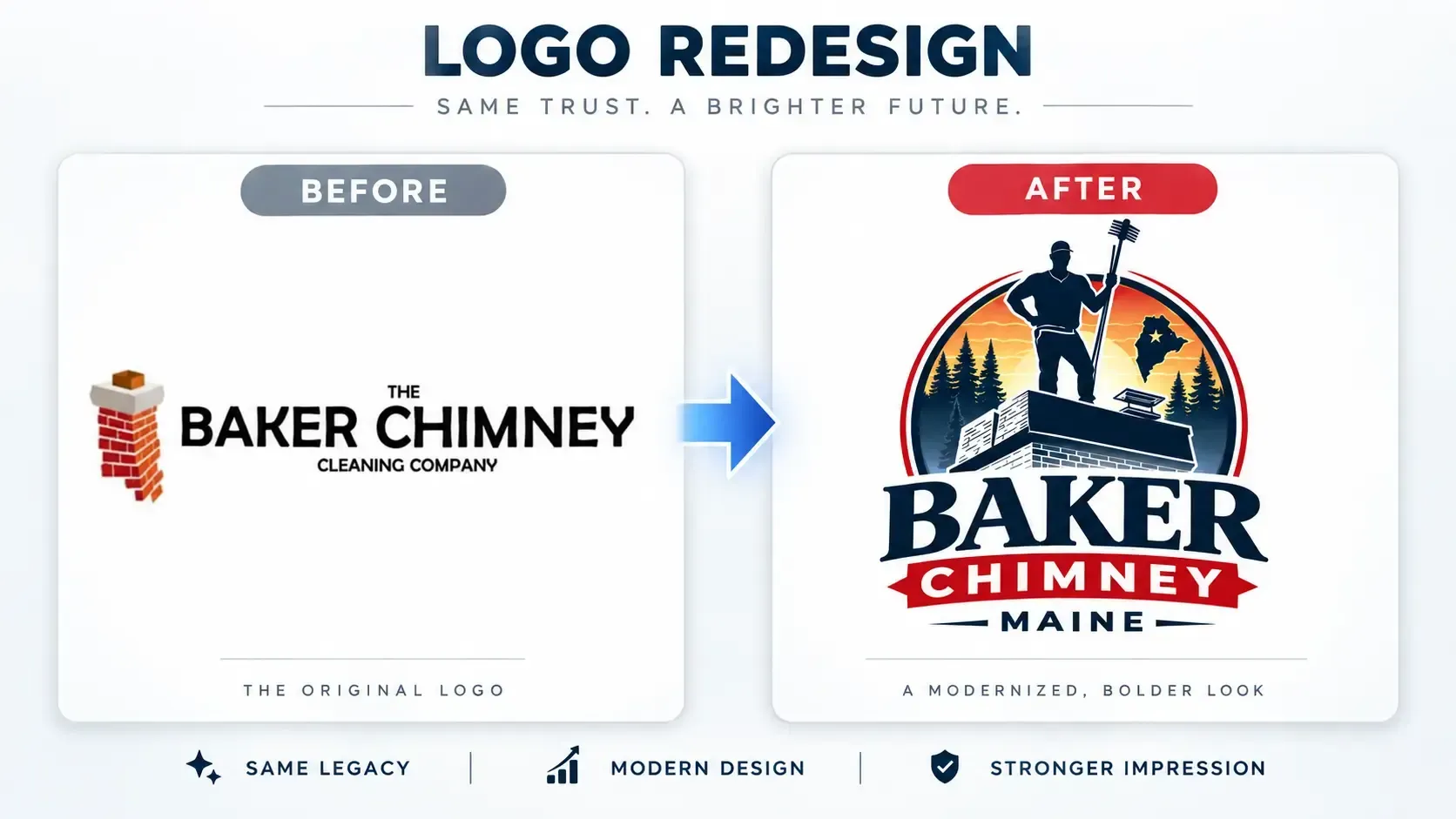
A brand refresh updates and modernizes existing brand elements — cleaning up a logo, standardizing colors and fonts, improving consistency across platforms — while keeping the core identity your customers already recognize intact.
A full rebrand replaces the identity entirely — a new name, a new logo built from scratch, a new visual direction — usually because the business itself has fundamentally changed (a merger, a major shift in services, outgrowing the original positioning entirely).
Most small businesses that feel their branding is "outdated" actually need a refresh, not a rebrand. A rebrand carries real risk — you're asking existing customers to recognize a business that looks different — and it's worth reserving for situations that genuinely call for it.
Signs You Might Need a Brand Refresh
Your Logo Doesn't Work Across Modern Platforms
A logo designed years ago for a business card or a storefront sign doesn't always translate well to a small social media profile icon, a mobile website header, or a favicon. If your logo becomes illegible or loses impact when scaled down, that's a practical, fixable problem—not just an aesthetic one.
Your Branding Looks Different Everywhere It Appears
Slightly different logo versions on your website, social media, vehicle wraps, and signage; inconsistent colors between your print materials and your digital presence; a font on your website that doesn't match what's on your storefront. Individually minor, these inconsistencies add up to a business that looks less established and less trustworthy than it actually is.
It No Longer Reflects What You Actually Do
Businesses evolve — a shop that's expanded its offerings, a service business that's added new specialties, a company whose original name or visual identity was built around a narrower version of what it does today. When your branding describes an earlier version of your business, it can quietly undersell what you currently offer.
You're Embarrassed to Hand Someone Your Business Card
This one is more intuitive than technical, but it's a real signal. If a business owner hesitates to hand over a business card or point someone to their website because the branding feels dated compared to competitors, customers are likely noticing the same gap, even if they can't articulate exactly why.
Competitors Look More Current Than You Do
A quick, honest look at how competitors present themselves — their websites, their social media, their overall visual polish — can be a useful gut check. Branding doesn't need to be flashy, but looking noticeably dated next to competitors in the same market can affect first impressions before a customer ever learns about the quality of your actual work.
What a Brand Refresh Typically Involves
A refresh is usually more contained than business owners expect. It commonly includes:
- Modernizing and simplifying the logo while preserving its recognizable core elements
- Standardizing a color palette and typography across all platforms
- Creating clear brand guidelines so future materials — from a social post to a printed flyer — stay consistent without reinventing the look each time
- Updating key touchpoints: website, social media profiles, business cards, signage, and vehicle graphics, in a coordinated rollout rather than a scattered one
typically approach this as a defined project with a clear before-and-after, rather than an open-ended redesign process.
Why Timing Matters
Refreshing your branding heading into a new year has a practical advantage: it gives you a natural, low-friction moment to reintroduce your business — in marketing materials, on social media, in a customer-facing announcement — without needing an artificial reason to explain the change. "Refreshed for [next year]" reads as intentional and positive, rather than raising questions about why a business suddenly looks different mid-year.
It also aligns naturally with other planning that tends to happen this time of year: budget decisions for the year ahead, and any website updates already on the calendar can be coordinated with a refreshed look rather than done separately.
FAQ
How do I know if I need a refresh instead of a full rebrand?
If your core business, name, and positioning haven't fundamentally changed, but your visual identity feels outdated or inconsistent, a refresh is usually the right scope. A full rebrand is typically reserved for a genuine shift in what the business is or does.
Will a brand refresh confuse my existing customers?
A well-executed refresh preserves recognizable core elements — often a simplified or modernized version of your existing logo and colors — specifically to avoid confusing loyal customers while still looking more current.
How long does a typical brand refresh take?
It varies by scope, but a focused refresh (logo, color palette, key touchpoints) is often completed in weeks rather than months, especially compared to a full rebrand.
What should I update first after a refresh — my website or my social media?
Ideally, both roll out around the same time to avoid an inconsistent transition period, but if you need to sequence, your website (as the most detailed representation of your brand) is a reasonable place to start.
Is a brand refresh worth the cost for a small business?
For a business showing several of the signs above, the cost is often modest relative to the ongoing cost of looking outdated or inconsistent to potential customers evaluating you against more current-looking competitors.
Start the New Year With a Brand That Works as Hard as You Do
If any of these signs sound familiar, October is a good time to start the conversation before next year's planning, and Maine Street Marketing's branding team can help you decide whether a refresh—or something more—makes sense for your business. Reach out to get started.