

Will Websites Become Unnecessary with AI?
We're not just building websites anymore. We're building AI-ready digital headquarters
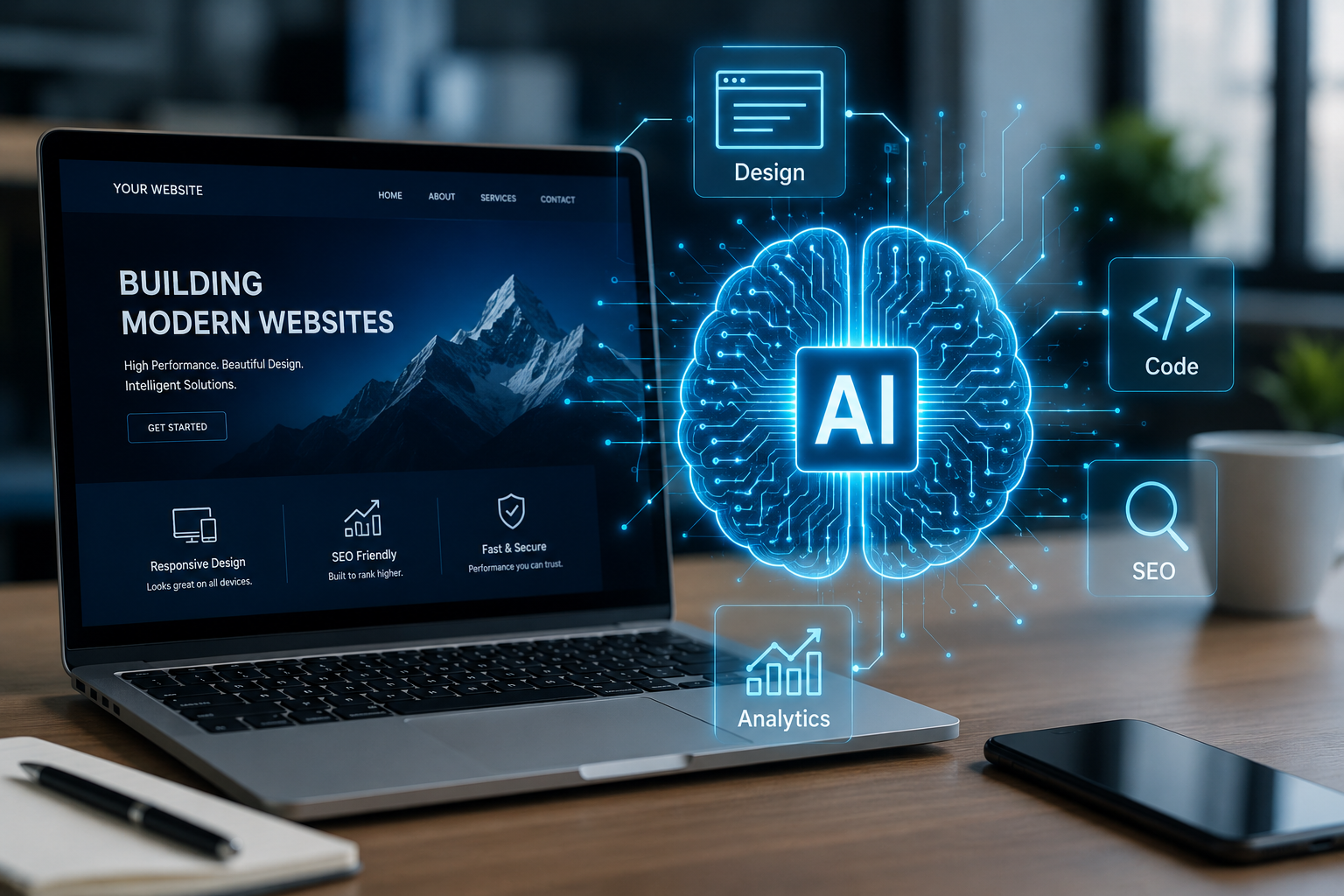
There's a question making the rounds in tech circles, boardrooms, and Twitter threads alike: if AI assistants can answer any question, book any reservation, and summarize any product review, do we still need websites at all?
It's a fair question. Search behavior is already shifting. People are asking chatbots for recommendations instead of scrolling through ten blue links. Some AI tools can now browse the web, click buttons, and complete tasks on your behalf. If a person never has to visit a site to get what they need from it, what's the site actually for?
The short answer: websites aren't going away, but their job is changing. Here's why.
AI Still Needs Something to Read
Every AI assistant that answers a question pulls its answer from somewhere. Even the most advanced models are trained on text that was written down — often on websites. And the ones that can search live, browse in real time, or use tools are still fetching pages, parsing HTML, and extracting facts.
If websites disappeared, AI wouldn't have fresh information to draw from. Someone still has to publish the restaurant's new menu, the software's changelog, the company's return policy. That "someone" is a website, even if a human never looks at it directly. In this sense, websites are becoming less like storefronts and more like source material — written for both people and machines to read.
The Interface Is Changing, Not the Need
Think about what a website actually does. It stores information, presents products, takes payments, and builds trust in a brand. AI can make the retrieval of that information faster and more conversational, but it doesn't replace the underlying business logic behind it.
A restaurant still needs a place to list its hours, hold its menu, and process a reservation. Whether a customer sees that information through a webpage or has it read aloud by a voice assistant is a delivery detail. The website — or at least the structured data and backend behind it — still has to exist somewhere for the AI to pull from.
Where Websites Genuinely Lose Ground
That said, it would be dishonest to claim nothing changes. Some categories of websites are more exposed than others:
- Informational content built purely for search traffic — generic "how to" articles, listicles, and SEO filler — is the most vulnerable. If an AI can synthesize the answer directly, there's less reason for a person to click through.
- Comparison and review sites may lose visits as AI assistants aggregate and summarize opinions instead of sending users to read them one by one.
- Simple transactional flows, like checking a flight status or converting currency, are increasingly handled inside a chat window rather than a dedicated page.
If a website's entire value proposition was "here's information you could get elsewhere, formatted nicely," that value is shrinking fast.
Where Websites Get More Important, Not Less
On the flip side, some things get harder to replace with AI:
- Brand identity and trust. People still want to see a company's storefront, not just a paraphrased summary of it. A polished, well-designed site signals legitimacy in a way a chatbot answer can't.
- Rich, visual, or interactive experiences. Configuring a car, browsing a portfolio, playing a game, or exploring a map isn't something a text answer can replicate.
- Transactions with real stakes. Buying a house, signing a contract, or managing a bank account will keep needing dedicated, secure interfaces — not just a conversational layer.
- Being the authoritative source AI cites. As AI answers become the front door for information, being the site an AI trusts and pulls from becomes a competitive advantage, similar to ranking on page one of Google today.
The Real Shift: From Destination to Data Source
The most useful way to think about this isn't "websites vs. AI" — it's a shift in who the audience is. Websites used to be built almost entirely for human eyeballs. Increasingly, they're built for two audiences at once: humans who still want to browse, and AI systems that need clean, structured, trustworthy information to relay to their users.
That means the winners in this new landscape probably aren't the websites that disappear — they're the ones that adapt. Clear structure, accurate and current information, and genuine expertise will matter more than clever formatting or keyword stuffing. Businesses that treat their website as their canonical source of truth, easy for both people and machines to understand, will likely come out ahead.
The Bottom Line
Websites won't become unnecessary — but a lot of mediocre websites might. AI is raising the bar. It's removing the need for content that exists purely to capture a search click, while increasing the value of sites that offer real substance, trust, and experiences that can't be reduced to a paragraph of text.
The web isn't dying. It's being edited down to what actually matters.